Is Ketamine an Opioid? Clearing Up the Confusion
A common question in discussions about pain management and mental health treatment is whether ketamine is an opioid. With its powerful effects, it’s easy to see why people might group them together. However, ketamine is not an opioid and works in a completely different way. Understanding this distinction is key to appreciating its unique medical applications.
What is Ketamine?
First and foremost, ketamine is classified as a dissociative anesthetic. It was developed in the 1960s and gained widespread use for anesthesia in medical procedures, particularly in battlefield settings, because it doesn’t suppress breathing or circulation like other anesthetics. Its “dissociative” property means it can make patients feel detached from their pain and their environment.
How Ketamine Differs from an Opioid
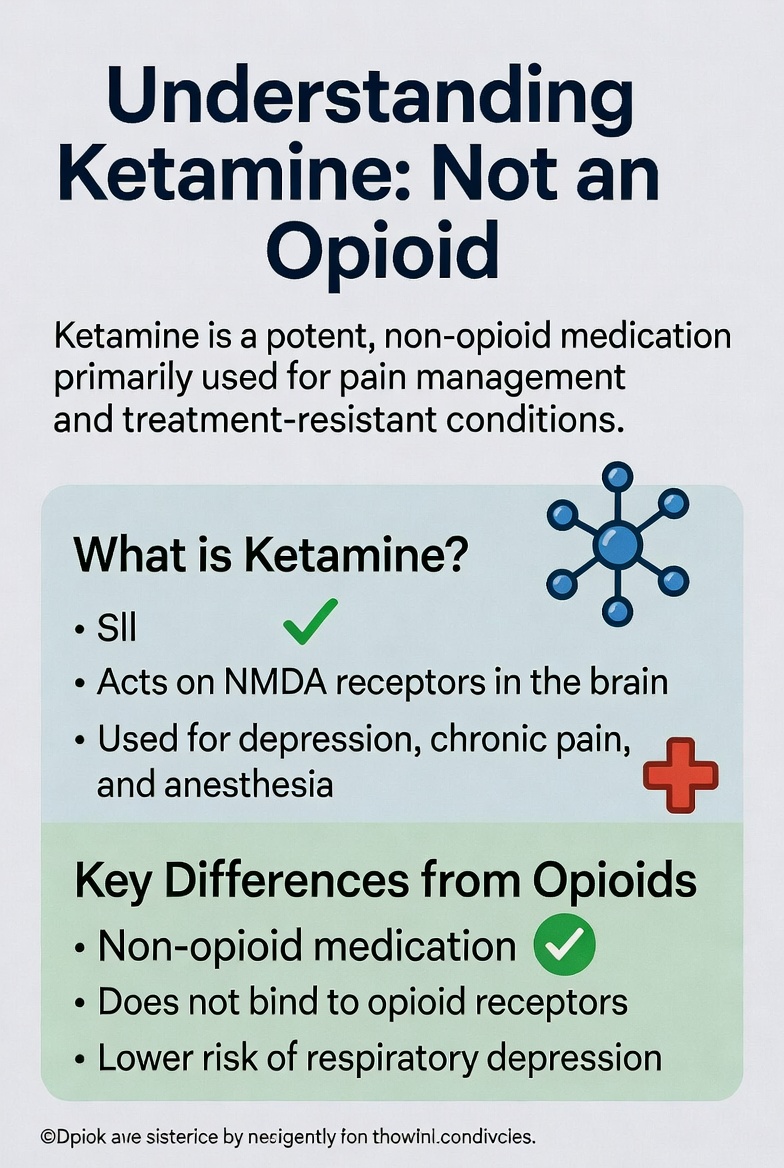
The primary difference lies in how these drugs interact with the brain. Opioids, such as morphine, fentanyl, and oxycodone, work by binding to opioid receptors throughout the central nervous system. This action blocks pain signals and produces feelings of euphoria, which contributes to their high potential for addiction and risk of overdose.
In contrast, ketamine primarily interacts with the N-methyl-D-aspartate (NMDA) receptor, a component of the glutamate system. By blocking this receptor, ketamine alters brain communication, leading to its anesthetic and antidepressant effects. It does not engage the opioid receptor system to produce its main effects, setting it apart mechanistically.
Modern Medical Uses and Pain Management
While still used as an anesthetic, ketamine therapy has emerged as a groundbreaking treatment for severe, treatment-resistant depression, anxiety, and PTSD. Administered in controlled clinical settings, it can provide rapid relief where other treatments have failed.
For pain management, ketamine is sometimes used to treat chronic pain conditions, especially those involving nerve pain. It can be particularly effective for patients who have developed a tolerance to opioids or for whom opioids are not a safe option.
Though it is not an opioid, ketamine does have potential for misuse due to its hallucinogenic effects. Responsible medical supervision is crucial for ensuring its safety and effectiveness. By understanding its role as a dissociative anesthetic, we can better recognize its value in modern medicine.