Address
304 North Cardinal
St. Dorchester Center, MA 02124
Work Hours
Monday to Sunday: 7AM - 12PM
Address
304 North Cardinal
St. Dorchester Center, MA 02124
Work Hours
Monday to Sunday: 7AM - 12PM
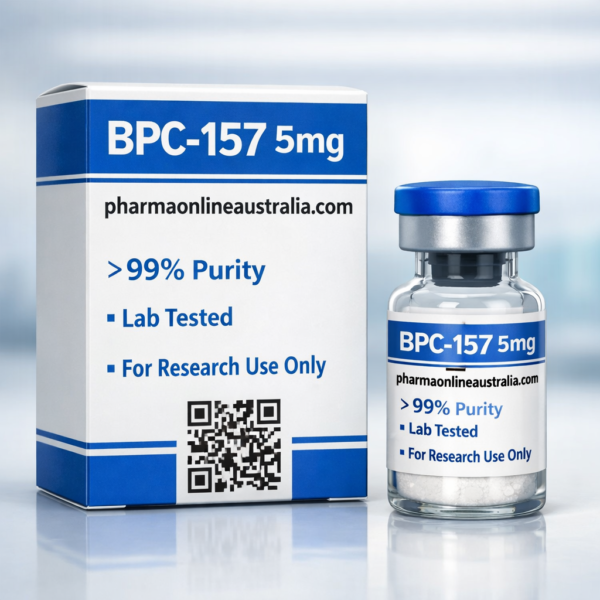
$60.00
BPC-157, the synthetic Body Protection Compound-157, remains a focal point in regenerative peptide research as of 2026. The 5mg vial format offers a practical, lower-volume option for laboratory studies, providing enough material for targeted protocols without excess
BPC-157 5mg Peptide: Compact Research Powerhouse
Introduction BPC-157, the synthetic Body Protection Compound-157, remains a focal point in regenerative peptide research as of 2026. The 5mg vial format offers a practical, lower-volume option for laboratory studies, providing enough material for targeted protocols without excess. This stable gastric pentadecapeptide continues to show intriguing tissue-repair effects in preclinical models, with emerging small-scale human observations adding to the interest. Sold strictly for research purposes, the 5mg size suits short cycles or localized experiments.
What Is BPC-157? BPC-157 is a 15-amino-acid sequence (Gly-Glu-Pro-Pro-Pro-Gly-Lys-Pro-Ala-Asp-Asp-Ala-Gly-Leu-Val) derived from a gastric protein. The lyophilized 5mg powder in vials reconstitutes easily with bacteriostatic water for injection or other research administration. Its stability in gastric environments allows versatile delivery methods in studies, distinguishing it from many peptides.
Mechanism of Action Research indicates BPC-157 promotes angiogenesis via VEGF upregulation, modulates nitric oxide pathways, reduces pro-inflammatory cytokines, and enhances growth hormone receptor expression on fibroblasts. It accelerates collagen organization and supports tendon-to-bone healing in animal models. Recent 2025 reviews highlight its pleiotropic effects on angiogenesis and NO-system balance, protecting tissues while aiding repair across muscles, ligaments, gut, and nerves.
Potential Benefits Preclinical data consistently demonstrate faster recovery from tendon, ligament, muscle, and bone injuries. Studies show improved biomechanical strength and reduced inflammation. Small retrospective human reports, including intra-articular applications for knee pain, note prolonged symptom relief in some participants. Gut-protective effects appear strong in models of ulcers and IBD. The compact 5mg vial supports efficient dosing for 10–25 research doses depending on protocol, ideal for acute-injury simulations or maintenance studies.
Dosage and Administration (5mg Vial) Common research protocols use 250–500 mcg daily, often split into 1–2 doses. A popular reconstitution adds 2 ml bacteriostatic water to the 5mg vial, yielding 2.5 mg/ml (250 mcg per 0.1 ml on an insulin syringe). For easier measurement, some protocols use 1–3 ml water. Subcutaneous injections near injury sites, intramuscular, or oral routes are explored. Cycles typically run 4–8 weeks. Sterile technique is essential in lab settings.
Safety and Side Effects Animal studies report excellent tolerability with no toxicity at high doses and minimal organ impact. A 2025 pilot on intravenous use noted good human tolerance in limited subjects. Preclinical work shows short half-life (<30 minutes) and renal clearance. Anecdotal reports mention occasional mild injection-site reactions. Comprehensive long-term human safety data remains absent due to its research-only status.
Legal Status and Considerations BPC-157 is not FDA-approved for human use and stays in regulatory scrutiny categories emphasizing safety concerns for compounding. It remains prohibited by WADA under S0 (non-approved substances), barring athletes. Available solely as a research chemical from compliant suppliers, users must follow local laws and avoid human consumption claims.
Conclusion The BPC-157 5mg peptide provides researchers an accessible entry for exploring regenerative mechanisms. While animal and early human data fuel optimism for tissue healing applications, rigorous clinical trials are still needed. This compact vial format streamlines experimentation, but its research-only designation demands caution and ethical adherence. Future studies may clarify its therapeutic horizon



Reviews
There are no reviews yet.