Address
304 North Cardinal
St. Dorchester Center, MA 02124
Work Hours
Monday to Sunday: 7AM - 12PM
Address
304 North Cardinal
St. Dorchester Center, MA 02124
Work Hours
Monday to Sunday: 7AM - 12PM
$150.00
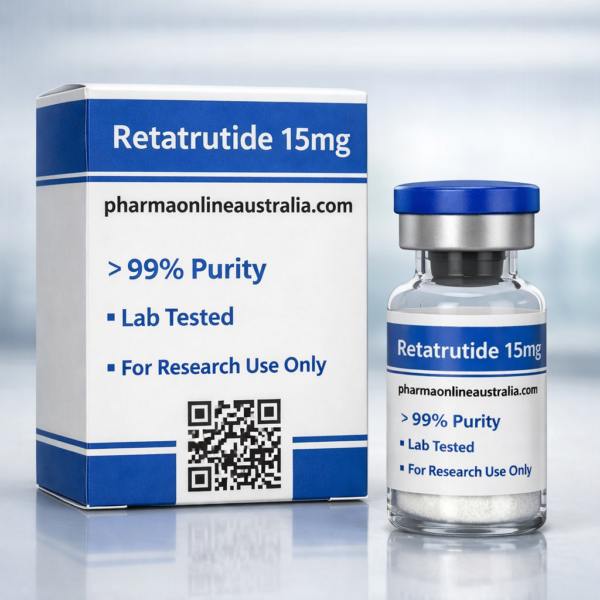
Retatrutide 15mg is a lyophilized research vial of an investigational synthetic peptide developed by Eli Lilly as a triple hormone receptor agonist targeting GLP-1, GIP, and glucagon receptors.
Retatrutide 15mg: The Triple-Agonist Peptide for Metabolic Research
Introduction Retatrutide 15mg is a lyophilized research vial of an investigational synthetic peptide developed by Eli Lilly as a triple hormone receptor agonist targeting GLP-1, GIP, and glucagon receptors. This “triple G” mechanism aims to enhance satiety, boost energy expenditure, improve glucose metabolism, and promote significant fat loss. Sold exclusively for laboratory and research purposes (not approved for human therapeutic use by the FDA or equivalent bodies as of 2026), 15mg vials are commonly available from peptide suppliers for exploratory studies. It requires reconstitution with bacteriostatic water before subcutaneous administration. Phase 2 and emerging Phase 3 trials (e.g., TRIUMPH series, TRANSCEND-T2D-1) highlight its potential in obesity, type 2 diabetes, and related conditions, though it remains investigational. Always approach as research-only; consult experts for any use.
Mechanism of Action Retatrutide activates three key receptors: GLP-1 for appetite suppression and insulin secretion, GIP for enhanced incretin effects, and glucagon for increased energy expenditure and fat oxidation. This multi-target approach leads to greater metabolic impact than dual agonists like tirzepatide. It slows gastric emptying, reduces food intake, and elevates thermogenesis. Preclinical and clinical data show dose-dependent effects, with sustained weight loss without early plateauing in trials up to 68 weeks.
Key Potential Benefits Research demonstrates impressive outcomes: • Substantial body weight reduction — Up to 24.2% at 12mg in Phase 2 (48 weeks); Phase 3 reports include ~28.7% at 12mg in obesity with osteoarthritis (68 weeks) and 16.8% in type 2 diabetes (40 weeks). • Improved glycemic control — A1C reductions up to 2.0% in diabetes trials. • Cardiometabolic enhancements — Lowered waist circumference, blood pressure, liver fat, and inflammation markers. • Additional effects — Potential pain relief in osteoarthritis, better physical function, and metabolic health support. High-dose protocols show participants achieving ≥15-30% weight loss in many cases, positioning it as a promising tool in obesity and diabetes studies.
Dosage and Administration for a 15mg Vial Reconstitution varies; common protocols add 1.5-3 ml bacteriostatic water (e.g., 3 ml for ~5 mg/ml concentration, where 1 ml = 5 mg). Gently swirl to dissolve—avoid shaking. Research protocols (based on trials): Start low for tolerance (e.g., 1-2 mg weekly), titrate every 4 weeks (e.g., 2→4→8→12 mg). A 15mg vial suits mid-to-high dosing; for example, at 5 mg/ml, a 5 mg dose = 1 ml (100 units on U-100 syringe). Inject subcutaneously once weekly (abdomen, thigh, arm); rotate sites. Trials used escalation to 12 mg max, with 15 mg exceeding studied levels and carrying higher risks. Cycle with breaks if needed; maintain sterility.
Potential Side Effects Common issues mirror other incretin mimetics: dose-dependent gastrointestinal effects (nausea, vomiting, diarrhea, constipation, abdominal pain), often peaking early and improving. Other reports include increased heart rate, hypersensitivity, fatigue, or rare serious events like pancreatitis or dysesthesia. Phase 3 data show good tolerability at tested doses (up to 12 mg), but higher/extrapolated amounts (e.g., 15 mg) lack safety data and may amplify risks like dehydration or GI severity. Monitor closely in research settings.
Conclusion Retatrutide 15mg represents cutting-edge research in multi-receptor agonists, offering superior weight loss and metabolic benefits compared to current options in trials. With Phase 3 progress (e.g., 2025-2026 readouts showing 16-28% reductions), it holds promise for obesity and diabetes studies. Source from reputable suppliers, use precise reconstitution, and prioritize safety protocols. As an investigational compound, further data are needed for full validation—responsible research use could advance understanding of metabolic therapeutics.


Reviews
There are no reviews yet.