Address
304 North Cardinal
St. Dorchester Center, MA 02124
Work Hours
Monday to Sunday: 7AM - 12PM
Address
304 North Cardinal
St. Dorchester Center, MA 02124
Work Hours
Monday to Sunday: 7AM - 12PM
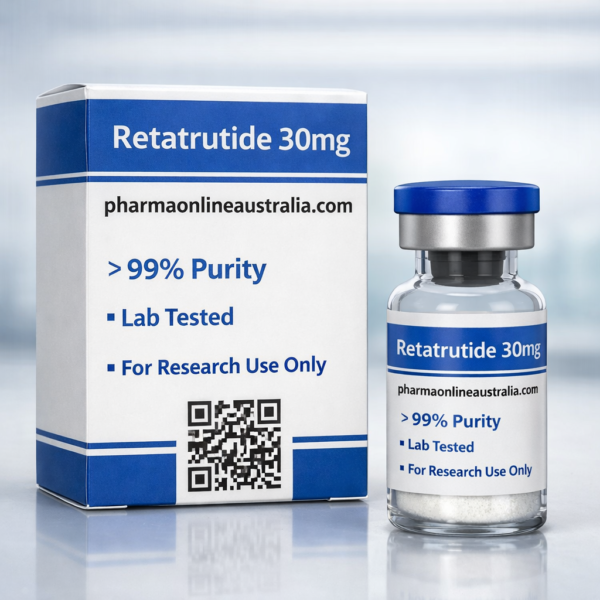
$250.00
Retatrutide 30mg is a larger lyophilized research vial of the investigational triple-agonist peptide (LY3437943) developed by Eli Lilly.
Retatrutide 30mg: High-Capacity Vial for Advanced Metabolic Peptide Research
Introduction Retatrutide 30mg is a larger lyophilized research vial of the investigational triple-agonist peptide (LY3437943) developed by Eli Lilly. As a first-in-class compound targeting GLP-1, GIP, and glucagon receptors, it is studied for superior effects on appetite suppression, energy expenditure, glucose control, and fat loss compared to dual agonists. Available from peptide suppliers in 30mg format for laboratory and analytical purposes only—not approved for human use by the FDA or equivalents—this vial suits extended protocols or higher cumulative dosing in research settings. It requires reconstitution with bacteriostatic water for subcutaneous studies. Phase 2/3 trials (TRIUMPH program) explore its role in obesity, type 2 diabetes, and comorbidities, with promising data but no therapeutic approval as of 2026. Treat strictly as research; professional guidance is essential.
Mechanism of Action Retatrutide’s multi-receptor agonism combines GLP-1-mediated satiety and insulin enhancement, GIP incretin potentiation, and glucagon-driven thermogenesis and lipolysis. This synergy amplifies metabolic shifts, including reduced food intake, delayed gastric emptying, elevated energy use, and sustained weight reduction without rapid plateauing. Trials show dose-dependent HbA1c drops (up to ~2%), liver fat clearance, and cardiometabolic improvements, with effects persisting through extended periods.
Key Potential Benefits Research highlights standout results: • Exceptional weight loss — Phase 2: up to 24.2% at 12 mg (48 weeks); Phase 3: up to 28.7% (~71 lbs) at 12 mg (68 weeks) in obesity/OA trials. • Glycemic improvements — Significant A1C reductions in diabetes models. • Cardiometabolic gains — Reduced waist circumference, blood pressure, inflammation, and liver fat. • Additional effects — Pain relief and function in knee OA, potential for broader metabolic health exploration. Higher cumulative exposure in research may probe limits beyond studied doses (max 12 mg weekly in trials), though untested at extremes.
Dosage and Administration for a 30mg Vial Reconstitution: Add 3 ml bacteriostatic water for ~10 mg/ml concentration (e.g., 0.3 ml = 3 mg). Gently swirl; avoid agitation. Store refrigerated post-reconstitution. Trial-based protocols: Start low (e.g., 2 mg weekly), escalate every 4 weeks (2→4→6→9→12 mg) to minimize GI effects. A 30mg vial supports multiple high-dose weeks (e.g., at 10 mg/ml, 12 mg = 1.2 ml or 120 units on U-100 syringe). Inject subcutaneously once weekly (abdomen, thigh, arm); rotate sites. Use sterile technique. Research often cycles or pauses; 30mg vials enable efficient high-volume studies without frequent reordering, but exceed trial maxima cautiously.
Potential Side Effects Common: Dose-related gastrointestinal issues (nausea, vomiting, diarrhea, constipation, abdominal pain), peaking early and often improving. Other: Increased heart rate (peaks then declines), fatigue, or injection-site reactions. Rare serious events in trials include pancreatitis or hypersensitivity. Higher/experimental doses amplify GI severity or dehydration risk. Trials (up to 12 mg) show good tolerability; uncharted higher levels warrant extreme caution in research.
Conclusion Retatrutide 30mg provides a high-capacity option for investigating triple-agonist potential in obesity, diabetes, and metabolic disorders, with trial data showing unmatched weight loss (up to ~29%) and health benefits. Larger vials facilitate advanced protocols while maintaining sterility and precision. Source from verified suppliers with COAs; prioritize reconstitution accuracy and safety monitoring. As Phase 3 data evolve, retatrutide could redefine incretin research—responsible, lab-focused use advances scientific understanding of multi-hormone therapeutics.



Reviews
There are no reviews yet.