Address
304 North Cardinal
St. Dorchester Center, MA 02124
Work Hours
Monday to Sunday: 7AM - 12PM
Address
304 North Cardinal
St. Dorchester Center, MA 02124
Work Hours
Monday to Sunday: 7AM - 12PM
$65.00
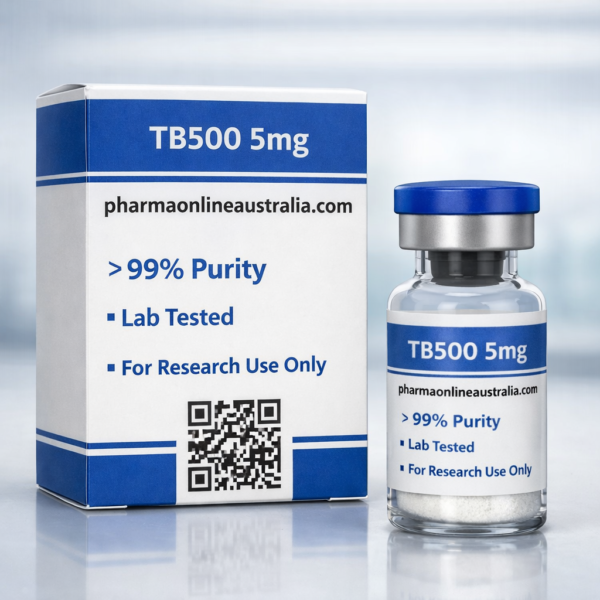
TB500 5mg, also known as Thymosin Beta-4 fragment (often the synthetic heptapeptide Ac-LKKTETQ), is a lyophilized research vial of a peptide derived from the naturally occurring 43-amino-acid protein thymosin beta-4.
TB500 5mg (Thymosin Beta-4): Research Peptide for Tissue Repair and Recovery
Introduction TB500 5mg, also known as Thymosin Beta-4 fragment (often the synthetic heptapeptide Ac-LKKTETQ), is a lyophilized research vial of a peptide derived from the naturally occurring 43-amino-acid protein thymosin beta-4. Sold exclusively for laboratory and analytical research—not for human therapeutic use—it is studied for its potential to promote wound healing, reduce inflammation, and support tissue regeneration. The 5mg vial is popular among researchers exploring injury recovery, angiogenesis, and cellular migration. It requires reconstitution with bacteriostatic water before subcutaneous or intramuscular administration. While preclinical and limited clinical data on thymosin beta-4 exist, TB500 itself lacks FDA approval or large-scale human trials. Always treat as research-only and seek professional guidance.
Mechanism of Action TB500 primarily acts by sequestering G-actin, regulating cytoskeletal dynamics to enhance cell migration, proliferation, and differentiation. This promotes angiogenesis (new blood vessel formation), accelerates keratinocyte and endothelial cell movement, and supports collagen deposition. It also exhibits anti-inflammatory properties and may reduce fibrosis while aiding muscle, tendon, ligament, and cardiac tissue repair in animal models. By modulating actin polymerization, TB500 facilitates faster wound closure and tissue remodeling, mimicking aspects of the body’s natural healing processes observed in thymosin beta-4 studies.
Key Potential Benefits Research highlights several intriguing effects: • Accelerated wound healing and re-epithelialization (up to 42-61% faster in rat models). • Enhanced muscle, tendon, and ligament recovery with reduced inflammation and adhesions. • Improved flexibility, tissue repair, and angiogenesis for injury rehabilitation. • Potential cardiovascular support, including better heart function post-infarct. • Anti-inflammatory and neuroprotective properties in preclinical settings. Animal and early human-related studies on thymosin beta-4 suggest benefits for chronic wounds, burns, and soft-tissue injuries, though human data for the TB500 fragment remain limited.
Dosage and Administration for a 5mg Vial Reconstitution: Add 1-2 ml bacteriostatic water (e.g., 2 ml yields 2.5 mg/ml concentration). Gently swirl to dissolve—avoid shaking. Store reconstituted solution refrigerated. Common research protocols: Loading phase of 2-5 mg per week (split into 2-3 subcutaneous or intramuscular injections, e.g., 2.0-2.5 mg every other day initially). Maintenance: 2-6 mg per month or 1-2 mg weekly. For a 2 ml reconstitution (2.5 mg/ml), a 2.5 mg dose equals 1 ml (100 units on U-100 insulin syringe). Inject near injury sites when possible; rotate areas and maintain sterile technique. Typical cycles last 4-6 weeks, followed by evaluation. Start low and titrate based on research goals.
Potential Side Effects TB500 appears generally well-tolerated in available preclinical and veterinary data, with no major toxicity reported up to high doses in animal studies. Mild, transient effects may include injection-site redness, swelling, or irritation; fatigue; headaches; dizziness; or lightheadedness. Rare reports mention nausea or temporary lethargy. Long-term human safety remains unknown due to limited controlled trials. Theoretical risks (e.g., excessive angiogenesis in certain conditions) warrant caution. Avoid in pregnancy, active cancer history, or without proper monitoring.
Conclusion TB500 5mg offers a convenient research tool for investigating actin modulation, tissue regeneration, and recovery processes, with promising preclinical evidence for healing and anti-inflammatory effects. The 5mg vial supports flexible dosing for loading and maintenance protocols. Source from reputable suppliers with quality verification, prioritize sterile practices, and cycle responsibly. While thymosin beta-4 research continues to evolve, rigorous independent human studies are still needed. Approach strictly as laboratory research—professional oversight is crucial for safety and scientific validity


Reviews
There are no reviews yet.